
Dog training guide PDFs offer accessible, step-by-step instructions for owners, covering everything from basic obedience to addressing behavioral challenges, fostering a stronger bond.
These resources, like the “Dog Training Made Easy” guide, detail operant conditioning and learning principles, while publications from Wisconsin 4-H provide foundational training techniques.
Furthermore, owning a well-trained dog enhances companionship and social interaction, making dog training guide PDFs invaluable tools for responsible pet ownership and success.

Why Use a Dog Training PDF?
Dog training PDFs provide a convenient and cost-effective alternative to expensive in-person classes or private training sessions. They allow owners to learn at their own pace, revisiting sections as needed, and practicing techniques in the comfort of their own homes.
Unlike fleeting online videos, a PDF guide offers a structured, comprehensive curriculum, often detailing the ‘why’ behind the training methods, such as the principles of operant conditioning. Resources like “Dog Training Made Easy” emphasize understanding how dogs learn, empowering owners to become more effective trainers.
These guides are readily downloadable and accessible on various devices – smartphones, tablets, or computers – making them perfect for on-the-go reference during walks or training sessions. They also often include detailed illustrations or diagrams, enhancing comprehension and ensuring correct technique. Furthermore, PDFs from organizations like Wisconsin 4-H offer trusted, research-backed methods, providing a solid foundation for successful dog training.
Benefits of Dog Ownership & Training
The benefits of dog ownership extend far beyond companionship; a well-trained dog enriches both the owner’s and the community’s lives. Training fosters a stronger bond built on mutual understanding and respect, reducing frustration and enhancing the joy of pet ownership.
A trained dog is a safer dog, exhibiting better control and responsiveness in various situations, minimizing risks during walks or interactions with others. Utilizing a dog training PDF, owners can proactively address potential behavioral issues, preventing problems like excessive barking or destructive chewing.
Moreover, training encourages social interaction, as owners often connect with other dog lovers during classes or at dog-friendly locations. This builds a supportive community and provides opportunities for socialization for both the dog and the owner. Ultimately, investing in training, guided by resources like those available in PDF format, creates a harmonious and fulfilling relationship with your canine companion.
Essential Dog Training Principles
Dog training PDF guides emphasize operant conditioning, positive reinforcement, and consistency as core tenets for effective communication and building desired behaviors.
Understanding Operant Conditioning
Operant conditioning, a cornerstone detailed in many dog training PDF guides, explains how dogs learn through consequences – rewards strengthen behaviors, while punishments weaken them. This learning process isn’t about dominance, but association; dogs connect actions with outcomes.
Guides like “Dog Training Made Easy” highlight this, explaining how understanding this principle unlocks effective training. It’s about creating a predictable environment where desired actions consistently lead to positive reinforcement, such as treats or praise. Conversely, ignoring or redirecting unwanted behaviors prevents their repetition.
Essentially, operant conditioning shapes behavior by manipulating the consequences, allowing owners to teach commands and address issues by focusing on rewarding the behaviors they want to see, rather than solely punishing those they don’t. This approach fosters a positive training experience and a stronger dog-owner relationship.
Positive Reinforcement Techniques
Positive reinforcement, a central theme in effective dog training PDF guides, focuses on rewarding desired behaviors to encourage their repetition. This method, far surpassing punishment in effectiveness, builds a positive association with training and strengthens the bond between dog and owner.
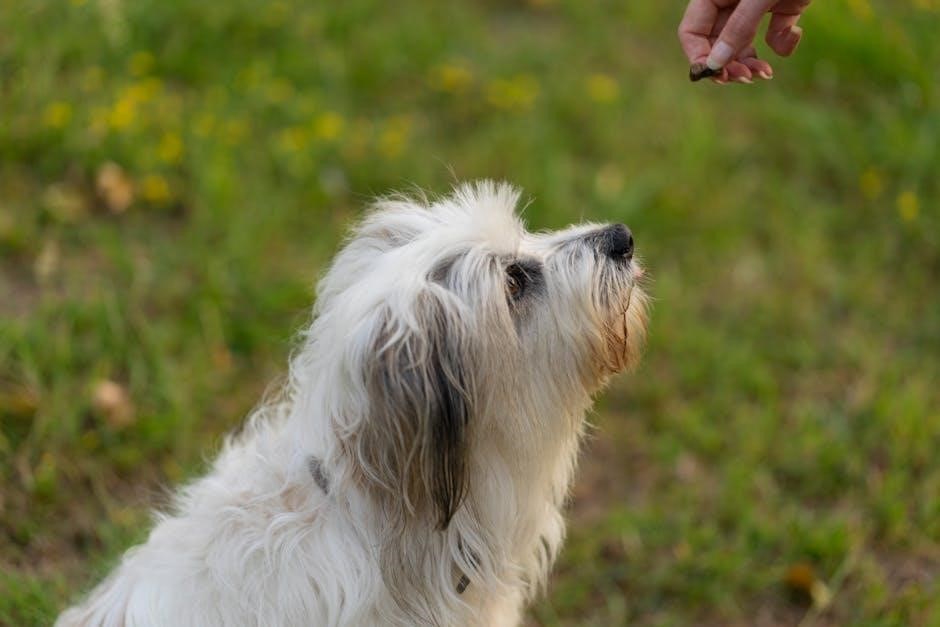
Techniques include offering treats, praise, toys, or even a simple scratch behind the ears immediately after the dog performs the desired action. Guides emphasize timing – the reward must follow the behavior instantly for the dog to make the connection.
“Dog Training Made Easy” stresses the importance of understanding what motivates your dog; some prefer food, others toys. Consistent application of positive reinforcement, coupled with clear communication, yields the best results, creating a willing and enthusiastic learner.
The Importance of Consistency
Dog training PDF guides universally highlight consistency as a cornerstone of success. Inconsistent commands or rules create confusion for the dog, hindering their ability to learn and potentially leading to behavioral issues. Every member of the household must adhere to the same training protocols.
This means using the same cues for each command – “sit” should always mean “sit,” never “down” – and consistently rewarding desired behaviors. Inconsistencies erode trust and slow progress.
Resources like those from Wisconsin 4-H emphasize that sporadic reinforcement weakens the learned behavior. Regular, predictable training sessions, even short ones, are far more effective than infrequent, lengthy attempts. Consistency builds clarity and solidifies learning, fostering a well-behaved companion.

Basic Obedience Training
Dog training guide PDFs detail essential commands like sit, down, stand, stay, and recall, forming the foundation for a well-mannered and responsive canine companion.
Sit Command Training
Dog training guide PDFs consistently emphasize food-lure training as an effective method for teaching the “sit” command. This involves holding a treat near your dog’s nose and moving it upwards and backwards, encouraging them to lower their rear end into a sitting position.
As the dog begins to understand the movement, the PDF guides recommend introducing the verbal cue “sit” simultaneously with the lure. Once the dog reliably sits with the lure, gradually phase it out, relying solely on the verbal command and rewarding successful sits with praise and treats.
Consistency is key, as highlighted in many dog training PDFs; practice in short, frequent sessions. Avoid pushing or forcing the dog into the sit position, as this can create negative associations. The goal is a willing and enthusiastic response to the “sit” cue, building a positive training experience for both you and your furry friend.
Down Command Training
Dog training guide PDFs frequently detail the “down” command as building upon the “sit” foundation. Similar to “sit,” food-lure training is often recommended. Hold a treat near the dog’s nose while they are in a sitting position, then slowly lower it towards the floor, encouraging the dog to follow with their nose and eventually lie down.
Introduce the verbal cue “down” as the dog begins to lower themselves. As with “sit,” phase out the lure gradually, relying on the verbal command and rewarding successful “downs” with positive reinforcement. PDFs stress patience and avoiding forcing the dog into the down position.
Many dog training guides suggest practicing on a soft surface initially for comfort. Short, consistent training sessions are crucial, and remember to celebrate each successful attempt to foster a positive learning environment for your canine companion.
Stand Command Training
Dog training guide PDFs often present the “stand” command as a progression from “sit” and “down,” utilizing food-lure techniques for effective learning. Begin with your dog in a “sit” position. Hold a treat near their nose and slowly move it upwards and slightly backwards, encouraging them to lift their head and shift their weight to stand.
Simultaneously introduce the verbal cue “stand.” As the dog rises, offer enthusiastic praise and the treat. Gradually reduce reliance on the lure, relying more on the verbal command and hand gesture. PDFs emphasize keeping training sessions brief and positive.
Consistent practice is key, and dog training guides recommend rewarding even small attempts towards the desired position. Avoid pulling or forcing your dog, as this can create negative associations with the command.
Stay Command Training
Dog training guide PDFs consistently highlight “stay” as a challenging but crucial command, requiring patience and gradual progression. Begin with your dog in a “sit” or “down” position. Present a clear hand signal – often a flat palm facing the dog – and firmly say “stay.”
Initially, hold the “stay” for just a second or two, then reward with praise and a treat. Gradually increase the duration, adding a second or two each time. PDFs emphasize rewarding calmness and stillness. Introduce distractions slowly, starting with minor noises and progressing to movement.
If the dog breaks the “stay,” calmly reposition them and start again with a shorter duration. Consistent reinforcement and a positive attitude, as detailed in many dog training guides, are vital for success.
Recall (Come) Command Training
Dog training guide PDFs universally stress the importance of a reliable recall – often cited as potentially life-saving. Start in a quiet, distraction-free environment. Say your dog’s name followed by “come” in a cheerful, encouraging tone. As they approach, enthusiastically praise and reward with a high-value treat.
Gradually increase the distance, but always maintain a positive and inviting demeanor. PDFs advise against using “come” when you’re angry or about to end something enjoyable, as this can create negative associations. Introduce distractions incrementally, practicing in varied locations.
Never punish your dog for eventually coming, even if it takes time. Consistent positive reinforcement, as detailed in numerous dog training guides, builds a strong and dependable recall.

Clicker Training
Dog training guide PDFs highlight clicker training as a precise method utilizing a distinct sound to mark desired behaviors, enhancing communication and learning speed.
What is Clicker Training?
Clicker training, as detailed in many dog training guide PDFs, is a highly effective method rooted in operant conditioning. It involves associating a distinct clicking sound with positive reinforcement, typically a treat. The clicker acts as a “marker,” precisely pinpointing the exact moment a dog performs the desired behavior.
This precision is crucial because it bridges the gap between the behavior and the reward, even if there’s a slight delay. The guide “Dog Training Made Easy” emphasizes this timing. Initially, the clicker is “charged” by repeatedly pairing it with a treat, so the dog learns the click predicts a reward.
Once the dog understands this association, the clicker becomes a powerful tool for shaping complex behaviors. It allows trainers to communicate clearly and consistently, guiding the dog towards the desired outcome with accuracy and efficiency, as outlined in various PDF resources.
Clicker Conditioning: A Step-by-Step Guide
Dog training guide PDFs consistently recommend a structured approach to clicker conditioning. First, “charge” the clicker by clicking and immediately giving a treat, repeating this 10-15 times in short sessions. This establishes the click-treat association.
Next, begin capturing behaviors – rewarding any spontaneous actions you like. Click the instant the dog does something desirable, then treat. For example, if your dog offers a sit, click the moment their rear touches the ground.
Gradually, lure behaviors using a treat to guide the dog into position, clicking and rewarding as they follow. Finally, fade the lure, relying on a hand signal and the clicker. Remember, consistency is key, as emphasized in numerous PDF guides, and practice in short, focused sessions.
Using a Treat Pouch Effectively
Dog training guide PDFs universally stress the importance of a readily accessible treat pouch for successful training. Position the pouch on your dominant side – typically the right, but reverse if left-handed – for quick, one-handed access to rewards.
Choose high-value treats that your dog loves, cut into small, pea-sized pieces. This prevents overfeeding and maintains focus. Regularly replenish the pouch to ensure you don’t run out mid-session.
Avoid rustling the pouch excessively, as this can distract your dog. Practice retrieving treats smoothly and efficiently. A well-stocked and strategically positioned treat pouch, as highlighted in many guides, streamlines training and maximizes positive reinforcement.

Puppy Training Specifics
Dog training guide PDFs emphasize early socialization, potty training, and crate training for puppies, utilizing food-lure techniques to teach basic commands effectively.
Early Socialization for Puppies
Dog training guide PDFs consistently highlight the critical importance of early socialization for puppies, emphasizing exposure to various sights, sounds, people, and safe dogs during a sensitive developmental period.
This proactive approach, often detailed within these guides, aims to build confidence and prevent fear-based behavioral issues later in life. Proper socialization isn’t simply about letting a puppy interact with everything; it’s about controlled and positive experiences.
PDF resources often recommend creating a socialization checklist, gradually introducing puppies to new stimuli in a safe and manageable way. This includes car rides, visits to parks (after vaccinations), and interactions with friendly, vaccinated dogs.
Guides stress observing the puppy’s body language for signs of stress and adjusting the pace accordingly, ensuring socialization remains a positive and enriching experience, laying the foundation for a well-adjusted adult dog.
Potty Training Guide
Dog training guide PDFs universally emphasize consistency and positive reinforcement as cornerstones of successful potty training. These guides typically advocate for establishing a regular potty schedule, taking puppies out frequently – especially after waking up, eating, and playing.
A common technique detailed in these resources involves rewarding successful elimination with immediate praise and a small treat, reinforcing the desired behavior. Conversely, guides strongly advise against punishment, as it can create fear and anxiety, hindering progress.
PDFs often recommend crate training as a valuable aid, leveraging a dog’s natural instinct to avoid soiling their den. Supervision is also key; actively monitoring a puppy’s behavior allows for timely intervention and prevents accidents.
Cleaning accidents thoroughly with enzymatic cleaners is crucial to eliminate odors and discourage repeat offenses, as highlighted in many comprehensive dog training guide PDFs.
Crate Training Basics
Dog training guide PDFs consistently present crate training as a beneficial method, providing a safe haven for your dog and aiding in housetraining; The guides emphasize introducing the crate gradually, making it a positive experience through treats and comfortable bedding.
Initially, encourage exploration with the door open, rewarding any interaction. Progress to short periods with the door closed, gradually increasing the duration as the dog becomes comfortable. Never use the crate as punishment, as this creates negative associations.
Feeding meals inside the crate can further enhance its appeal. PDFs often advise against leaving a puppy in the crate for excessively long periods, especially when young, to prevent distress.
Proper crate size is also crucial – large enough for the dog to stand, turn around, and lie down comfortably, as detailed in many dog training guide PDFs.

Addressing Common Behavioral Issues
Dog training guide PDFs offer solutions for issues like barking, chewing, and anxiety, employing techniques to redirect unwanted behaviors and promote calmness and control.
Dealing with Excessive Barking
Dog training guide PDFs frequently address excessive barking, a common concern for many owners. These guides emphasize identifying the cause of the barking – is it territorial, attention-seeking, boredom, or anxiety? Understanding the root issue is crucial for effective intervention.
Many resources advocate for ignoring attention-seeking barks, while rewarding quiet behavior. Techniques like “quiet” commands, paired with positive reinforcement, are often detailed. Some PDFs suggest redirecting the dog’s attention with a toy or puzzle to combat boredom-induced barking.
Furthermore, guides may explore desensitization and counter-conditioning for territorial barking, gradually exposing the dog to triggers at a safe distance. Addressing underlying anxiety through enrichment and potentially professional help is also often recommended within these comprehensive dog training guide PDFs.
Managing Chewing Behavior
Dog training guide PDFs consistently highlight chewing as a natural canine behavior, particularly in puppies, but it needs appropriate management. These guides stress the importance of providing ample, appropriate chew toys – varying textures and materials are often recommended to keep the dog engaged.
A key strategy detailed in these resources is redirecting chewing from inappropriate items (furniture, shoes) to designated chew toys. Positive reinforcement, like praise and treats, should accompany this redirection; Puppy-proofing the environment by removing tempting items is also crucial.
Furthermore, dog training guide PDFs often address boredom and anxiety as potential drivers of destructive chewing, advocating for increased exercise and mental stimulation. If chewing is excessive or accompanied by other behavioral issues, professional guidance is frequently suggested.
Preventing Separation Anxiety
Dog training guide PDFs emphasize proactive strategies to prevent separation anxiety, rather than solely reacting to its manifestation. These resources advocate for gradually acclimating puppies (and even adult dogs) to being alone, starting with very short absences and progressively increasing the duration.
Creating a safe and comfortable “den” – often a crate or designated room – is frequently recommended, associating it with positive experiences like treats and toys. Avoid making departures and arrivals overly dramatic; calm greetings and goodbyes are key.
Dog training guide PDFs also suggest providing enriching activities before leaving, such as puzzle toys or a long walk, to tire the dog out mentally and physically. If anxiety is severe, professional help from a veterinarian or certified trainer is often advised.

Advanced Dog Training
Dog training guide PDFs unlock advanced skills like loose-leash walking, refined recall, and engaging trick training, boosting mental stimulation and strengthening the dog-owner connection.
Leash Manners & Loose-Leash Walking
Dog training guide PDFs frequently dedicate sections to improving leash manners, a crucial aspect of enjoyable walks and public outings. These guides emphasize techniques to discourage pulling, creating a more relaxed experience for both dog and owner.
Many resources advocate for positive reinforcement methods, rewarding the dog for walking calmly by your side with treats or praise. The goal is to teach the dog that a loose leash equates to positive outcomes, encouraging them to maintain a comfortable distance.
PDFs often detail exercises like changing direction abruptly, stopping frequently, and rewarding the dog when they naturally check in with you. Consistent practice, as outlined in these guides, is key to establishing loose-leash walking as a default behavior, transforming stressful walks into pleasant bonding experiences.
Advanced Recall Training
Dog training guide PDFs often progress beyond basic recall to encompass advanced techniques for reliable off-leash control. These guides emphasize building a rock-solid recall even amidst distractions, a vital skill for safety and freedom.
Advanced training typically involves increasing the distance and difficulty of recall commands, introducing distractions like other dogs or enticing scents, and utilizing high-value rewards. Many PDFs advocate for “proofing” the recall by practicing in various environments.
Furthermore, these resources detail techniques like the “emergency recall,” a uniquely powerful command reserved for critical situations. Consistent practice and positive reinforcement, as detailed in these guides, are paramount to achieving a dependable recall, ensuring your dog returns reliably when called.
Trick Training for Mental Stimulation
Dog training guide PDFs frequently highlight trick training as a fantastic method for providing mental enrichment and strengthening the bond with your canine companion. Beyond basic obedience, learning tricks challenges dogs cognitively, preventing boredom and reducing behavioral issues stemming from understimulation.
These guides often present a progressive approach, starting with simple tricks like “shake” or “play dead” and gradually increasing complexity. They emphasize breaking down tricks into small, manageable steps, utilizing positive reinforcement – treats, praise, or toys – to motivate learning.
Furthermore, many PDFs suggest incorporating trick training into daily routines, turning it into a fun and engaging activity for both dog and owner, fostering a deeper connection and a happier, more fulfilled pet.

Resources & Further Learning
Dog training guide PDFs are readily available online, alongside qualified trainers offering personalized guidance for optimal results and continued learning success.
Recommended Dog Training PDF Downloads
Numerous dog training guide PDFs cater to diverse needs, offering comprehensive instruction for owners at all levels of experience. “Dog Training Made Easy: A Step-by-Step Guide to Using the Pro-Training Clicker” is a highly recommended resource, focusing on positive reinforcement and clicker conditioning techniques.
For foundational obedience training, explore the Wisconsin 4-H publications, including “DOG OBEDIENCE: NOVICE AND BEYOND Leader Guide” (Pub. No. 4H439) and “TRAINING YOUR DOG Leader Guide” (Pub. No; 4H436). These guides provide structured lessons and practical exercises for teaching essential commands.
Additionally, “1 Puppy Training Guide” by Drs. Senf, Briley, and Spencer offers valuable insights into early socialization, potty training, and crate training specifically for puppies. These PDF downloads provide accessible and affordable learning opportunities, empowering owners to build a strong, positive relationship with their canine companions.
Finding Qualified Dog Trainers
While dog training guide PDFs offer excellent self-study resources, sometimes professional guidance is invaluable. Seeking a qualified dog trainer ensures personalized instruction tailored to your dog’s specific needs and temperament. Look for trainers certified by reputable organizations, demonstrating a commitment to ethical and effective training methods.
Consider trainers experienced in the techniques outlined in popular PDF guides, such as positive reinforcement and clicker training. Local veterinary clinics and animal shelters often maintain lists of recommended trainers in your area.
Online directories and review platforms can also assist in your search. Prioritize trainers who emphasize positive reinforcement, avoid punitive methods, and foster a strong bond between you and your dog. A skilled trainer complements the knowledge gained from PDF resources, accelerating your training journey.