
Janaza Prayer Dua PDF: A Comprehensive Guide
This guide offers detailed Janaza supplications, encompassing authentic Arabic text, transliteration, and English translations for adults and children, readily available in PDF format.
Understanding Janaza Prayer
Janaza prayer, a collective obligation (fard kifaya) upon the Muslim community, is a special supplication offered for the deceased. It’s not a traditional prayer with ruku (bowing) and sujud (prostration), but rather a standing prayer consisting of four takbirs (declarations of God’s greatness).
The primary purpose of this prayer is to seek forgiveness, mercy, and blessings for the departed soul. It’s a powerful demonstration of Islamic brotherhood and a reminder of our shared mortality. Offering Janaza prayer is considered a significant act of piety and a way to honor the deceased.
If no one performs the Janaza prayer, the entire Muslim community bears a collective sin. Therefore, it’s crucial to prioritize attending and participating in this important ritual whenever possible. The dua recited during this prayer is a heartfelt plea to Allah for the deceased’s well-being in the afterlife.
The Importance of Offering Janaza Prayer
Offering Janaza prayer holds immense significance in Islam, representing a profound act of compassion and solidarity with the bereaved. It’s a vital religious duty, a fard kifaya, meaning the entire Muslim community is responsible for fulfilling it. If no one performs it, the community collectively bears the sin.
Participating in Janaza prayer demonstrates respect for the deceased and offers solace to their family. The supplications (duas) recited during the prayer are believed to benefit the departed soul, seeking forgiveness and mercy from Allah. It’s a powerful reminder of the afterlife and our accountability before God.
By attending and actively engaging in the prayer, Muslims reaffirm their faith and strengthen their communal bonds. It’s an opportunity to remember our own mortality and prepare for the inevitable journey. The act of offering Janaza prayer is a testament to the Islamic emphasis on empathy and mutual support.
The Collective Responsibility in Janaza Prayer
Janaza prayer is classified as a fard kifaya, a collective obligation upon the entire Muslim community. This means if a sufficient number of Muslims perform the prayer for the deceased, the responsibility is discharged for everyone. However, if no one fulfills this duty, the entire community is considered sinful before Allah.
This collective responsibility underscores the importance of communal solidarity and mutual care within Islam. It’s not merely an individual act of piety, but a shared obligation to honor the deceased and seek forgiveness on their behalf. The community’s participation demonstrates respect and provides comfort to the grieving family.
Therefore, Muslims are encouraged to prioritize attending Janaza prayers whenever possible. Even if only a few individuals offer the prayer, it shields the community from divine displeasure. Recognizing this shared duty fosters a sense of unity and reinforces the Islamic values of compassion and collective accountability.
Components of the Janaza Prayer
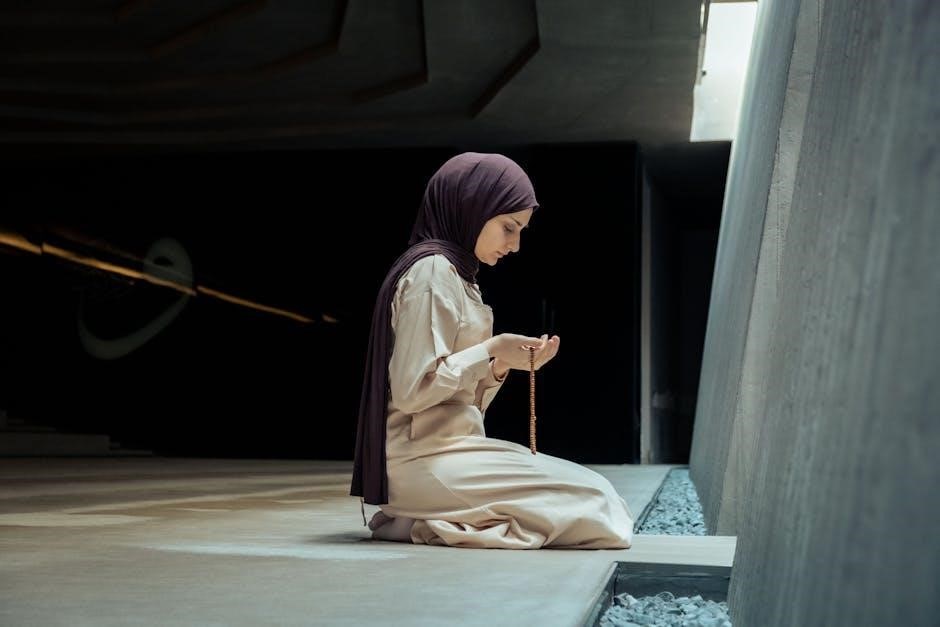
Janaza prayer uniquely consists of four Takbirs, omitting Ruku and Sujud, and incorporates specific supplications (Dua) for the deceased’s forgiveness.
Number of Takbirs in Janaza Prayer
A defining characteristic of the Janaza prayer is the recitation of four distinct Takbirs (declarations of God’s greatness). Unlike standard Salah (obligatory prayers), the Janaza prayer does not involve bowing (Ruku) or prostration (Sujud). Each Takbir is followed by a specific supplication, or Dua, offered for the deceased.
The first Takbir is performed after the initial standing, and typically, Surah Al-Fatiha is recited afterward. Following the second Takbir, blessings (Salawat) are invoked upon the Prophet Muhammad (peace be upon him), mirroring the format used in regular prayers – Salatul Ibrahimiya. The third Takbir is then announced, leading to a heartfelt Dua specifically for the departed soul. Finally, the fourth and last Takbir concludes the prayer, often followed by a brief, silent Dua offered individually by each attendee.
These Takbirs are central to the structure and spiritual significance of the Janaza prayer, serving as a powerful means of seeking divine mercy and forgiveness for the deceased.
Absence of Ruku and Sujud
A key distinction between the Janaza prayer and the conventional five daily prayers (Salah) lies in the deliberate omission of Ruku (bowing) and Sujud (prostration). This unique characteristic reflects the specific nature of the Janaza prayer, which is a supplication for the deceased, rather than a direct worship ritual performed by them.
The prayer primarily consists of standing and reciting specific Duas (supplications) after each of the four Takbirs (declarations of greatness). The absence of physical postures like bowing and prostration emphasizes the focus on verbal supplication and seeking forgiveness on behalf of the departed soul. This streamlined format allows for a swift and dignified prayer service, often conducted at or near the burial site.
Understanding this difference is crucial for correctly performing the Janaza prayer and appreciating its distinct purpose within Islamic funeral rites.

The Dua (Supplication) in Janaza Prayer
Central to the Janaza prayer, Duas seek forgiveness and mercy for the deceased, drawing from authentic Quranic verses and established prophetic traditions (Hadith).
Authenticity of Dua from Quran and Hadith
The supplications (Duas) recited during Janaza prayers are not arbitrary; their roots are firmly planted in the foundational texts of Islam – the Quran and the Sunnah (teachings and practices of Prophet Muhammad, peace be upon him). Authenticity is paramount, ensuring the prayers offered are in accordance with divine guidance.
Many of the Duas commonly used are directly derived from verses in the Quran that emphasize seeking forgiveness for believers, both living and deceased. Furthermore, numerous authentic Hadith narrations detail specific supplications taught by the Prophet Muhammad (peace be upon him) to be recited during funeral prayers.
Scholars meticulously verify these Duas through rigorous Hadith criticism, examining the chain of narrators and the content itself to ascertain their genuineness. Using Duas with established authenticity guarantees that the supplications offered are pleasing to Allah and beneficial for the deceased, aligning with the principles of Islamic worship.
Arabic Text of the Dua
The core Dua recited during Janaza prayer, seeking forgiveness and mercy for the deceased, is presented below in its original Arabic script. Accurate recitation is encouraged, though not mandatory for validity, as intention and sincerity hold immense weight. Preserving the original wording ensures adherence to the established Sunnah.
Here’s the commonly used Dua: “اللَّهُمَّ اغْفِرْ لِحَيِّنَا وَمَيِّتِنَا، وَشَاهِدِنَا وَغَائِبِنَا، وَصَغِيرِنَا وَكَبِيرِنَا، وَذَكَرِنَا وَأُنْثَانَا. اللَّهُمَّ مَنْ أَحْيَيْتَهُ مِنَّا فَأَحْيِهِ عَلَى الْإِيمَانِ، وَمَنْ تَوَفَّيْتَهُ مِنَّا فَتَوَفَّهُ عَلَى الْإِيمَانِ.”
This Arabic text represents a powerful plea for forgiveness encompassing all Muslims, living and deceased. Many PDF resources dedicated to Janaza prayers will include this text prominently, often alongside transliteration and translation to aid understanding and correct pronunciation for those unfamiliar with the Arabic language.
Transliteration of the Dua
For those unfamiliar with Arabic pronunciation, a transliteration of the Dua is crucial for accurate recitation during the Janaza prayer. While variations exist, the following represents a common and widely accepted transliteration, aiming for clarity and ease of use. It’s important to note that transliteration is an approximation and may not perfectly capture the nuances of Arabic sounds.
Here’s the transliteration: “Allahumma ighfir li-hayyina wa mayyitina, wa shahidina wa gha’ibina, wa saghirina wa kabirina, wa dhakariina wa unthana. Allahumma man ahyaytahu minna fa-ahyihi ‘ala al-imani, wa man tawaffaytahu minna fa-tawaffahu ‘ala al-imani.”
Many Janaza prayer PDF guides include this transliteration alongside the Arabic text and English translation, facilitating participation for a broader audience. Practicing the transliteration beforehand can enhance confidence and ensure a more meaningful connection with the supplication’s intent.
English Translation of the Dua
Understanding the meaning of the Dua is paramount for a heartfelt and sincere supplication during the Janaza prayer. The English translation provides clarity and allows mourners to connect with the spiritual essence of the words being recited. Numerous Janaza prayer PDF resources include this translation alongside the Arabic text and transliteration.
The translation reads: “O Allah, forgive our living and our dead, our present and our absent, our young and our old, our males and our females. O Allah, whoever You grant life from us, let him live in faith, and whoever You cause to die from us, let him die in faith.”
This powerful Dua encapsulates a comprehensive plea for forgiveness and mercy, encompassing all Muslims, both living and deceased. It’s a request for a righteous life and a blessed passing, reinforcing the importance of faith in both worlds, readily available in downloadable PDF guides.

Specific Duas for Different Situations
Janaza PDF guides detail specific Duas tailored for adults, children, and martyrs (Shaheed), offering appropriate supplications for each unique circumstance.
Dua for Adult Deceased
The Dua for an adult deceased, frequently found within Janaza Prayer Dua PDF resources, is a heartfelt supplication seeking Allah’s forgiveness and mercy for the departed soul. It acknowledges human fallibility while emphasizing the hope for divine acceptance.
PDF guides typically present the Arabic text alongside a clear transliteration and an accurate English translation, enabling broader understanding and participation. A common supplication includes asking Allah to grant the deceased a high station in Paradise, to ease their hardships in the grave, and to purify them from sins.
The Dua often beseeches Allah to bestow blessings upon the deceased, to grant them entry into Jannah (Paradise), and to protect them from the torment of the grave. Authentic Duas are sourced from the Quran and Sunnah, ensuring their validity and spiritual potency. These resources emphasize the importance of sincerity and devotion when offering this crucial supplication.
Dua for Child Deceased
The Dua specifically for a deceased child, detailed in many Janaza Prayer Dua PDF guides, differs slightly from that offered for adults, reflecting the innocence and purity of the child. It centers on seeking Allah’s mercy and elevating the child’s status in the afterlife.
PDF resources provide the Arabic text, transliteration, and English translation, facilitating correct recitation. The supplication often expresses hope that the child will be among those admitted to Paradise without accountability, due to their lack of worldly sins.
It’s a poignant Dua, asking Allah to grant the child comfort and peace, and to console their grieving parents. Authentic versions, found in Islamic texts, emphasize the special compassion Allah has for children. These guides highlight the importance of heartfelt sincerity when making this deeply emotional supplication, offering solace to the bereaved.
Dua for Martyrs (Shaheed)
The Dua offered for a Shaheed (martyr), as detailed in Janaza Prayer Dua PDF resources, is unique and profoundly respectful. It acknowledges the immense sacrifice made in the path of Allah and seeks His abundant blessings upon the martyr.
PDF guides present the specific Arabic text, transliteration, and English translation, emphasizing the belief that martyrs are alive with Allah, receiving sustenance and reward. The supplication often includes praise for their bravery and unwavering faith.
It’s a Dua expressing gratitude to Allah for granting them the honor of martyrdom and requesting forgiveness for any minor shortcomings. Authentic versions, sourced from Islamic scholarship, highlight the high status of martyrs in the afterlife. These resources underscore the importance of reverence and sincere supplication for those who died defending Islam.

Etiquette Before, During, and After Janaza Prayer
PDF guides detail proper preparation, respectful conduct during the Janaza, and recommended actions afterward, ensuring reverence for the deceased and adherence to Islamic teachings.
Preparing for the Prayer
Before participating in the Janaza prayer, several preparations demonstrate respect and sincerity; PDF resources emphasize the importance of performing wudu (ablution) to ensure ritual purity, a fundamental requirement for all Islamic prayers. Muslims are encouraged to arrive at the location of the Janaza prayer promptly, avoiding unnecessary delays that might disrupt the proceedings.
PDF guides often highlight the significance of having a sincere intention (niyyah) to perform the prayer solely for the benefit of the deceased, seeking Allah’s forgiveness and mercy on their behalf. Men should ideally attend the Janaza prayer in the mosque or designated prayer area, while women typically pray at home or in a separate designated area, adhering to Islamic guidelines regarding gender segregation during prayer.
Furthermore, it’s advisable to familiarize oneself with the basic steps and dua (supplication) of the Janaza prayer beforehand, utilizing the PDF as a learning tool, to ensure a more focused and meaningful participation. Removing worldly distractions, such as silencing mobile phones, also contributes to a respectful and attentive atmosphere.
Conduct During the Prayer
During the Janaza prayer, maintaining reverence and focus is paramount, as detailed in PDF guides. Stand respectfully, facing the qibla (direction of the Kaaba), and follow the Imam (prayer leader) attentively. The prayer consists of four takbirs (declarations of greatness), each followed by specific supplications, readily available in the PDF resources.
PDF materials emphasize that there is no ruku (bowing) or sujud (prostration) in the Janaza prayer; it is a standing prayer exclusively. After each takbir, recite the prescribed dua silently and with sincerity, seeking forgiveness and mercy for the deceased. Avoid unnecessary movements or conversations that could disrupt the solemnity of the prayer.

It’s crucial to listen carefully to the Imam and follow his lead in reciting the dua and performing the takbirs. Maintain a humble and respectful demeanor throughout the prayer, remembering the gravity of the occasion and the importance of offering sincere supplications for the departed soul, as outlined in the PDF.
Actions After the Prayer
Following the completion of the Janaza prayer, as detailed in PDF guides, participants typically offer individual duas (supplications) for the deceased, standing at their graveside. These personal prayers are a continuation of seeking forgiveness and blessings for the departed soul. PDF resources often provide suggested duas for this moment.
It’s customary to respectfully accompany the deceased to the burial site, demonstrating solidarity with the grieving family. Avoid any actions or conversations that could be disrespectful or cause further distress to those mourning. PDF materials emphasize the importance of maintaining a somber and considerate atmosphere.

After the burial, offering condolences to the family is a vital Islamic practice. Expressing sympathy and offering support can provide comfort during their time of grief. Many PDF guides include appropriate phrases for offering condolences, reinforcing the community’s role in supporting one another during difficult times.

Finding Janaza Prayer Dua in PDF Format
Numerous reliable Islamic websites and organizations offer authentic Janaza Dua in PDF format, ensuring accessibility and ease of reference for all Muslims.
Reliable Sources for PDF Downloads
Locating authentic Janaza Dua PDF resources requires careful consideration. Several reputable online platforms consistently provide accurate and verified Islamic content. IslamicFinder is a widely trusted source, offering downloadable PDF guides with clear Arabic text, transliteration, and English translations. Similarly, Duas.org presents a comprehensive collection of supplications, including the Janaza prayer, in a convenient PDF format.
Additionally, websites affiliated with prominent Islamic scholars and institutions, such as Darul Uloom and Islamic Relief, often host downloadable PDFs containing essential Islamic prayers and rituals. These sources generally prioritize accuracy and adherence to traditional Islamic teachings. When searching, prioritize websites with a strong reputation for scholarly rigor and avoid platforms with questionable credibility. Always cross-reference information from multiple sources to ensure the authenticity of the Dua and its adherence to the Quran and Sunnah.
Remember to exercise caution when downloading PDFs from unfamiliar websites, as they may contain inaccuracies or misinterpretations.

Ensuring Authenticity of the PDF
Verifying the authenticity of a Janaza Dua PDF is crucial for ensuring its religious validity. Begin by checking the source; reputable Islamic institutions and scholars are preferred. Examine the Dua itself, comparing it with established texts from the Quran and authentic Hadith collections. Look for clear citations referencing the origin of the supplication.
Pay close attention to the Arabic text, ensuring it’s free from errors or unusual variations. Cross-reference the transliteration and English translation with multiple sources to confirm consistency. Be wary of PDFs with overly embellished or unconventional interpretations. A genuine Dua will align with mainstream Islamic scholarship.
If the PDF lacks clear sourcing or contains discrepancies, consult with a knowledgeable Islamic scholar for verification. Prioritize resources that emphasize adherence to the Sunnah and avoid those promoting innovation or deviation from established practices. Authenticity safeguards the sincerity and acceptance of your prayer.
Accessibility of PDF Resources
Numerous online platforms offer Janaza Dua PDF resources, catering to diverse needs and preferences. Websites of prominent Islamic organizations, such as those dedicated to Islamic education and jurisprudence, frequently provide downloadable guides. Digital libraries specializing in Islamic literature also host authentic PDF versions of the Dua.
Mobile applications focused on Islamic practices often include a Janaza prayer section with accessible PDFs. Social media groups and forums dedicated to Islamic learning may share vetted resources, but exercise caution and verify their authenticity. Many resources are available free of charge, promoting widespread access to this vital supplication.
Consider factors like file size and compatibility with your device when downloading. Ensure the PDF is clearly formatted and easy to read, especially the Arabic text and transliteration. Prioritize resources that are readily shareable, enabling you to benefit others with this important knowledge.